

On doing what's right
Do what's right, not what's easy

Thoughts
*Would you do the right thing, even if it’s the hard thing to do? I believe in doing the right thing, not the easy thing. Always and whenever.
The hard thing to do and the right thing to do are almost always the same thing. Any time you’re confronted with a choice, the harder thing is usually the right thing.
*Always prioritize yourself. Choose yourself—and choose what’s best for you.
But don’t pick the easy way out due to fear. Don’t go for the exit because you’re feeling temporary pain and you forecast trouble. It is just that—a forecast. And that temporary pain can often be the precursor to long-term fulfillment. So why walk away from that potential?
I try to delay gratification over the quick hit, even though I have to remind myself of that constantly—and honestly, I think we all forget sometimes.
Choose you.
But choose the long-term you.
*I’ll always be grateful for the people I meet along the way. Everyone and everything is there for a reason. Take what you will, but never discount the meaning that certain humans brought into your life—and how they made you feel. Even if you don’t realise it today, even if it was but for a fleeting moment, be grateful it happened.
Insights
Ted Lasso on taking on growth and challenges:
“Taking on a challenge is a lot like riding a horse, isn’t it? If you’re comfortable while you’re doing it, you’re probably doing it wrong.”
Someone (attributed to Walt Whitman but debunked) once said about not forming conclusions or negative opinions:
“Be curious, not judgmental.”
Billy in Moneybag about being straight with people (and yourself):
“Would you rather get a bullet to the head, or five to the chest and bleed to death?”
Reflection of the week
You’ll find this week’s reflection in the section below → A good read.
It ties directly to this week’s book recommendation.
A good read
Imagine you’re standing by a quiet railway track. A trolley is speeding toward five people. And all that stands between them and death…is a single lever in front of you.
Pull it, and you save five lives. But you divert it to another track with only one person, so you knowingly end one life.
One, instead of five.
What do you do?
Most people answer fast. But when you sit with it—really sit with it—you realise this isn’t about trolleys or tracks.
It’s about the choices we make every day without noticing.
Who we prioritise.
What we justify.
What we live with.
Do we pull the lever? Or we don’t?
Staying passive and being idle is still a decision.
We always have to make a call. And it’ll always stay with us.
That’s why I love Justice by Michael J. Sandel. It doesn’t preach. It doesn’t tell you what the “right” answer is. It forces you into the uncomfortable space where real growth happens—where you start questioning the beliefs you’ve been carrying around for years.
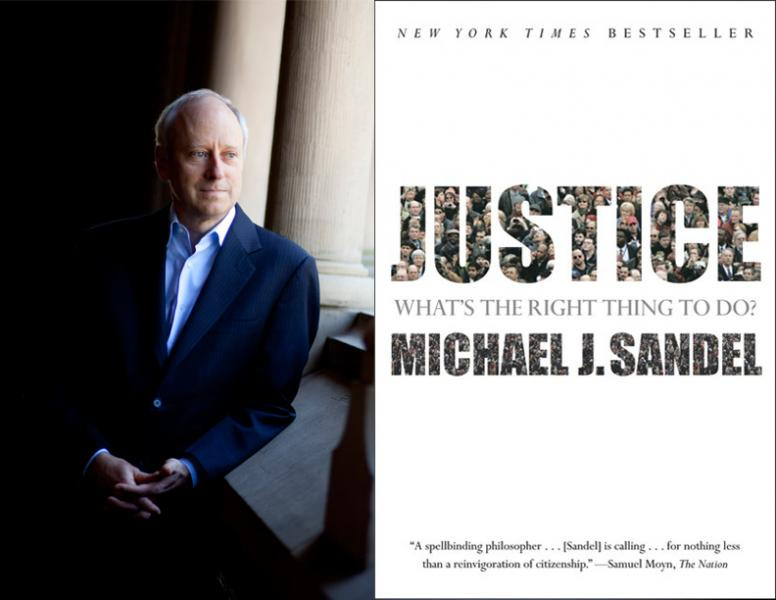
I asked that question to someone very dear to me recently and her answer was logical, but I never saw it coming. It was one that I hadn’t considered before, taking a whole different angle to the dilemma that I was left quietly struck. It was rooted around the premise that everyone is right where they’re intended to be, and everything is there, and happens, for a reason.
She has an incredible mind, it just works differently. So guess what?
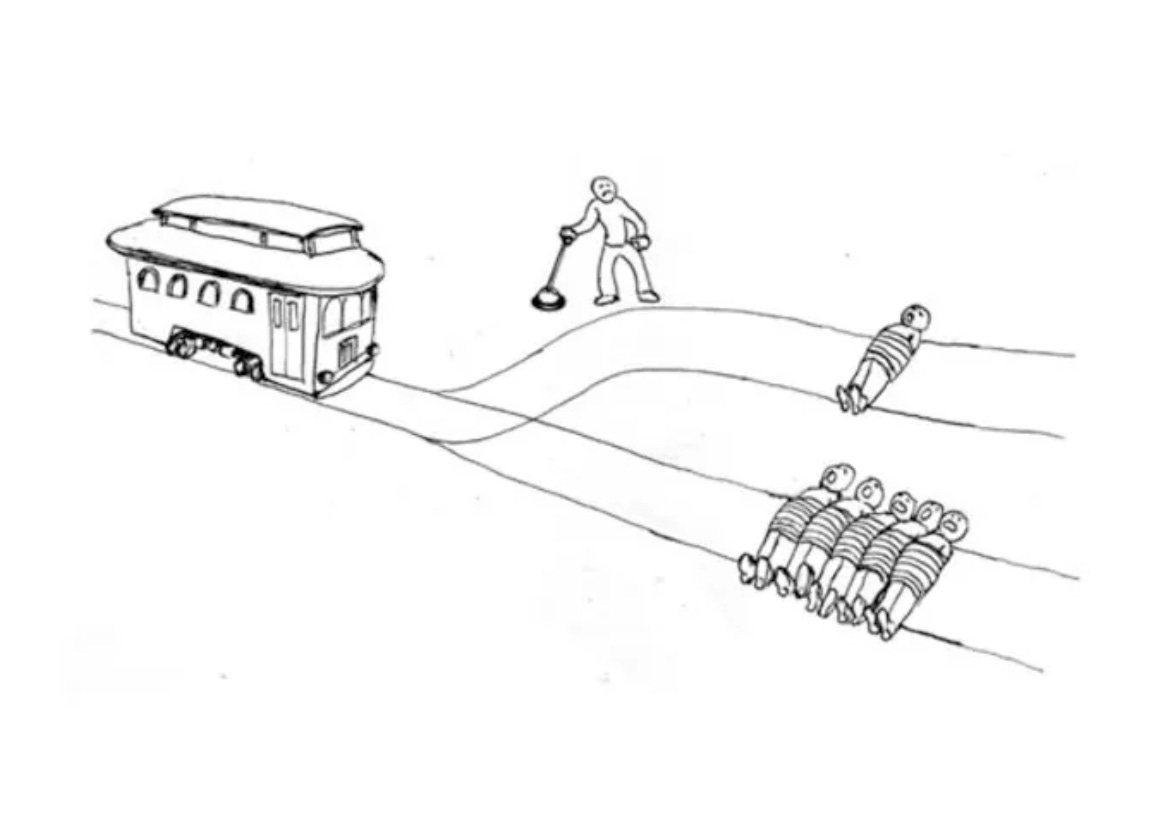
She didn’t pull the lever.
So I listened and said nothing, but she had my mind spiraling all over again—just the way it did when I first read the book a few years back.
So if you care about becoming a better leader, a clearer thinker, a more intentional human, this book will push you exactly where you need to go.
And if you also like tampering with philosophy and ethical dilemmas, I think this is a certain go-to.
This week’s reflection → Do you think the end justifies the means? I’d love to get your take on this, and on the trolley problem—would you pull the lever?
How can I help?
I also happen to coach people. I learned from one of the world’s best, Robert Ellis.
Would you like to have a short coaching conversation? Sometimes all it takes is a 90-minute deep conversation to point you in the right direction. Or give you a little nudge. Maybe you just need someone to hear you out. I’m here for you.